
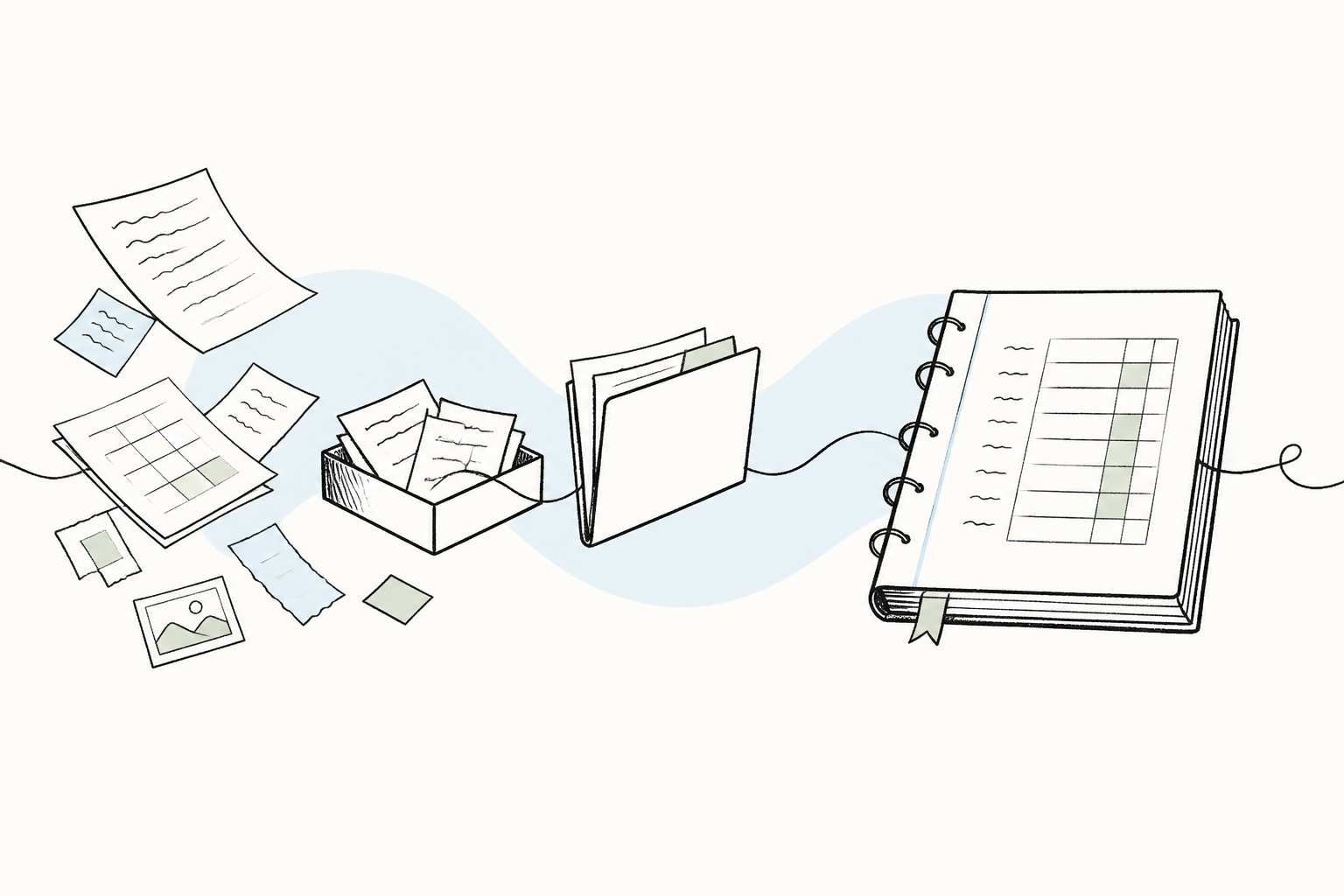
A report becomes stressful when staff must rebuild months of work from memory, email, folders, and spreadsheets. The better approach is to decide what proof will be needed before the work begins.
Start with the questions the report must answer.
List the decisions a board or funder will make from the report. Then identify the records, approvals, numbers, and stories needed to support those decisions.
This keeps the team focused on useful evidence instead of collecting information that no one uses.
Give each record a home.
Staff should know where a record belongs, who checks it, and when it is complete. The answer may be a shared folder, a tracker, a form, or a field in a system your team already uses.
Consistency matters more than complexity. One clear location is better than several clever ones.
Review evidence before the deadline.
Add a short evidence check to the normal work. Missing records are easier to fix after a week than after six months.
By the time reporting begins, the team should be explaining the work, not searching for proof that it happened.
A strong report is the result of a clear evidence trail, not a last-minute writing effort.